I Was Young When I Left Home
It must be good for somebody, this here song. I know it’s good for somebody. If it ain’t for me, it’s good for somebody.
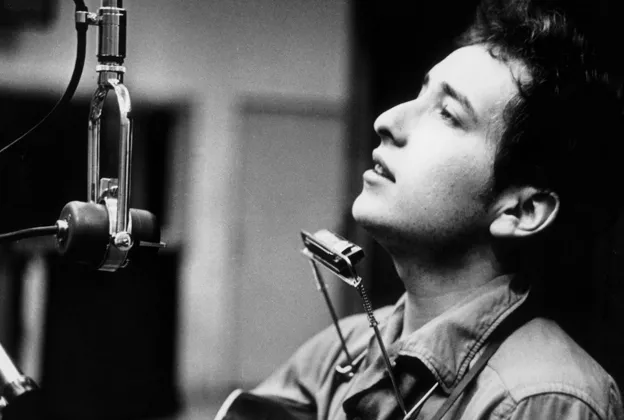
Of all Bob Dylan’s hidden gems, ‘I was young when I left home’ holds the greatest cultural afterlife relative to its impact in its own time. We only have evidence of Dylan playing it once - for a demo tape recorded in Dinkstown Minneapolis, at the home of his friend Bonnie Beecher. Since 1961, it has been rereleased on several compilation albums (last year’s Bootleg Series vol. 19 being the latest), and has been covered by artists including Anohni, Marcus Mumford, and Big Thief – it was the first song they ever released.
Bob’s original is a heartbreaking ballad about homesickness and faith, backed by intricate steel string guitar as his voice wavers between a hardened, roadworn affect and a youthful fragility. It knocked me out the first time I heard it. Much of Bob’s early material is shockingly good, & also has a kind of alien quality: it sounds as if the songs have mistakenly ended up in his possession, this weird young boy shouldn’t be the one singing them. ‘I was young when I left home’ is no less startling, but it feels exactly right coming from young Bob – the lyrics reflect perfectly that mixture of innocence and grit which Bob conveys with his voice in these early years.
I think lots of people become intense Bob Dylan fans because they’re obsessed with the Bob Dylan story – it’s not quite enough to love the songs on their own, they have to be tied into Bob’s life and career in some way, have to unlock something about the mystery. ‘I was young when I left home’ is a rare song which seems to tell us something about the young Robert Zimmerman, rather than the mythical Bob Dylan he quickly became. It feels like it speaks to the real experience of Bob’s move away from Minnesota into the bustling New York folk scene. But however truthful and earnest the song feels, it actually borrows heavily from a pre existing song, Hedy West’s ‘500 miles’.
And ‘500 miles’ itself isn’t even a solid starting point - folklorists have traced the song’s origins back deep into American folk culture. The canonical version of the song - as recorded in Steve Roud’s folk song index - is ‘900 miles’, rather than 500, and is believed to have originated on the American railroads in the 1800s. I think it’s magical that you can trace the song’s history from 19th century workers, through Hedy West, through Bob Dylan, all the way to Anohni & Adrienne Lenker. That’s really the unique magic of folk music, as much as lyrics shift and sonic textures develop - the homesick heart of the song is preserved and passed on through generations of voices.
Dylan recorded his version in a session at Bonnie Beecher’s apartment in Dinkytown, a studenty area near the campus of the University of Minnesota. Beecher’s apartment was known the ‘Minnesota Hotel’, because it was a common place for artists to crash overnight in Minneapolis while out on the road. Dylan recorded about an hour and a half of music there, with help from a blues musician called Tony Glover. The ‘Minnesota Hotel tapes’, as they came to be known, consist mainly of covers (lots of them Woody Guthrie songs) as well as some old folk standards and a few originals - or near originals - like ‘I was young when I left home’.
These sessions took place in 1961, after Bob had signed his first recording contract with Columbia records, but before the release of his self titled debut album in 1962. For me, the stuff on these tapes is way better than that album would eventually be: they sound casual, free and full of life in a way the album sadly doesn’t. I love the little intro Bob gives ‘I was young when I left home’ as much as the song itself - “It must be good for somebody, this here song. I know it’s good for somebody. If it ain’t for me, it’s good for somebody.”
Dylan’s words, offhand and drawling, seem to predict the rich history of cover versions that would follow, while also reflecting something truthful about the nature of folk songs. They are fleeting, light things - coming and going with ease, rambling on through time.
I’m undecided on which cover version is my favourite. The romance of Big Thief’s version being the first thing they ever put out made me very happy when I found it out, I love that band and I love Adrienne Lenker as a songwriter – and this song sounds gorgeous in her voice. Anohni’s version is obviously stunning and, for what it’s worth, though I’m not a fan of his other work - Marcus Mumford’s version is not bad at all.
I was reading through the lyrics and I think the song marks the beginning of an idea that Bob never stops returning to: once you’ve left home, there’s no going back. He spells it out directly in ‘I was young when I left home’ when he sings:
I don’t like it in the wind
Wanna back home again
But I can’t go home this way
But it’s there again in the howl of “No direction home” from ‘Like a Rolling Stone’, and in the title of the documentary ‘Dont Look Back’, it’s carried right through to the latter end of his career with ‘Things have changed’ and in ‘Mississipi’ from Love and Theft – “You can always come back, but you can’t come back all the way”. The life of a troubadour, to keep on rambling, further and further away from home. You never go back there, but you never stop singing about it.
Postscript
In a beautiful twist of fate, my friend Yannick was in the flat rehearsing with my flatmate Saya while I was writing this post – & when I told him about what I was writing, he told me that he had released a song which samples Woody Guthrie singing '900 Miles' on an old BBC Radio broadcast. You can buy & listen to it here
Music is magic
Love, David